

|
Quantity
|
Total
|
||
|
|
|||
|
|
|||
VetXpert Integrated Laboratory Systems for Veterinary Clinics
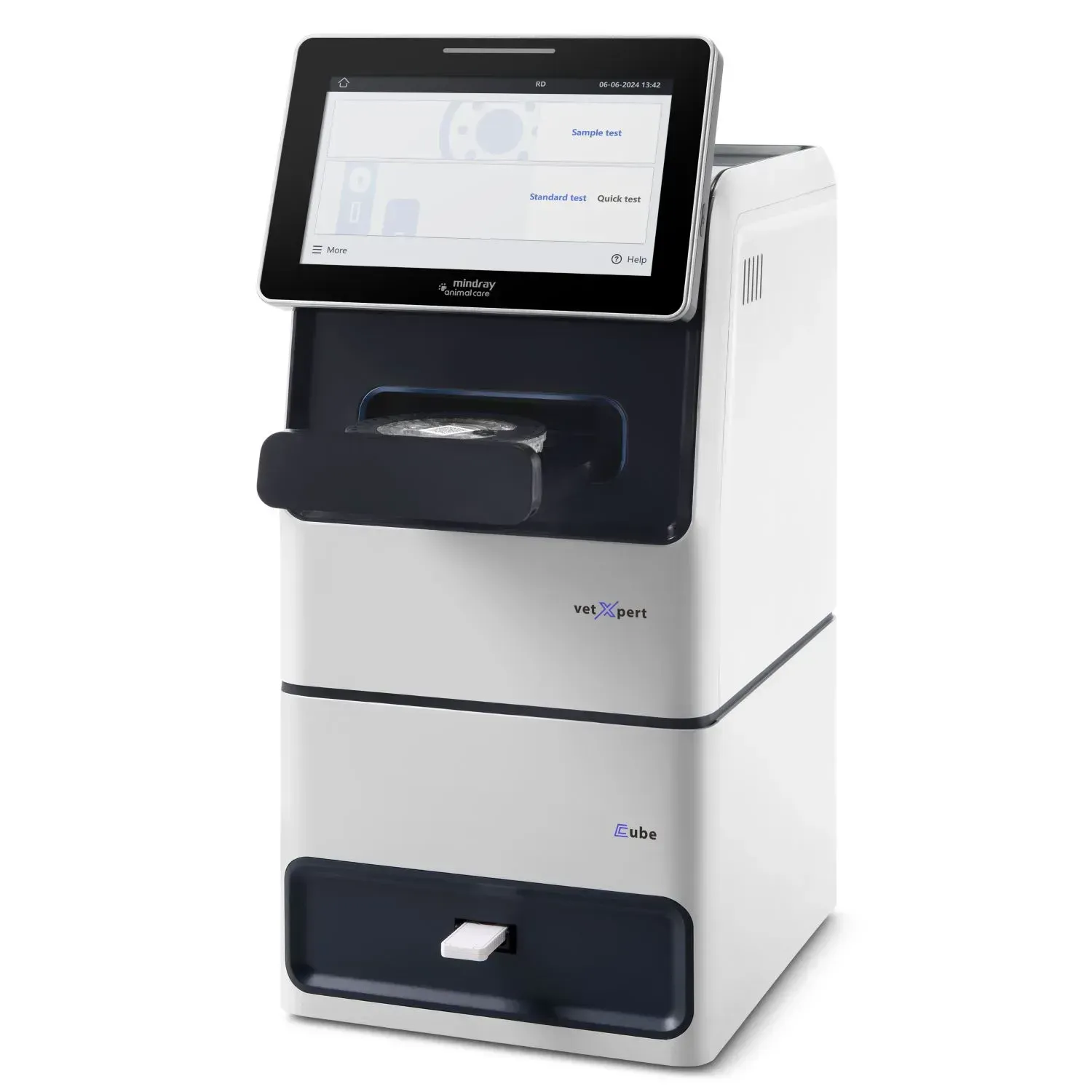
VetXpert integrated laboratory systems are solutions for veterinary clinics that want to combine several areas of in-vitro diagnostics within one workflow. This section features the vetXpert Cube — a compact veterinary analyzer that combines the capabilities of biochemical and immunological diagnostics.
This format is suitable for clinics developing their own laboratory but wishing to avoid overloading the workspace with multiple separate devices. The vetXpert Cube allows clinics to obtain important laboratory results directly on site and create a convenient test menu based on the real needs of doctors.
What is an integrated laboratory system?
An integrated laboratory system is not just a single analyzer, but a practical solution that helps combine different types of tests within one logical workflow. For a veterinary clinic, this means fewer manual operations, faster access to results and more convenient management of the laboratory direction.
- Biochemical diagnostics — assessment of liver and kidney function, electrolyte balance, protein and metabolic status.
- Immunological diagnostics — testing of infectious, inflammatory, hormonal, cardiac, renal and other specific markers.
- Compact format — a convenient solution for clinics where rational use of laboratory space is important.
- Ready-made panels and test kits — the ability to quickly run tests without complex laboratory preparation.
- Reagent model — development of the laboratory direction through regular use of discs, tests and consumables.
vetXpert Cube — biochemistry and immunology in one system
vetXpert Cube can be used as the central element of a compact laboratory in a veterinary clinic. It combines the biochemistry and immunology directions, helping doctors assess the patient’s condition faster during the initial consultation, preoperative preparation, inpatient monitoring or treatment control.
For biochemical testing, the system works with ready-made profiles and discs-rotors. For the immunology direction, compatible immunological test kits are used, allowing clinics to expand their diagnostic capabilities without complex infrastructure.
vetXpert Cube
Integrated laboratory system for biochemical and immunological diagnostics in one platform.
What tasks is the vetXpert Cube suitable for?
An integrated system is especially useful when a clinic needs to obtain laboratory information quickly without sending samples to an external laboratory. This helps the doctor see a broader picture of the patient’s condition and make decisions based on several diagnostic directions.
- Primary diagnostics — rapid assessment of the patient’s general condition during consultation.
- Preoperative assessment — checking important biochemical parameters before anesthesia.
- Inpatient care and therapy — monitoring treatment dynamics and patient condition.
- Infections and inflammation — use of immunological tests to clarify the clinical picture.
- Renal, cardiac and hormonal markers — expansion of the clinic’s diagnostic capabilities.
Benefits of integrated laboratory systems
- Several directions in one platform — biochemical and immunological testing in one compact analyzer.
- Space saving — relevant for small laboratories and clinics with limited working space.
- Faster laboratory workflow — results are available without waiting for an external laboratory.
- Flexible test menu — the ability to select profiles and tests according to real clinical tasks.
- Convenience for the doctor — results can be used during consultation, inpatient monitoring or treatment control.
- Predictable economics — regular use of panels and test kits creates additional profitability for the laboratory direction.
Data management and the laboratory ecosystem
The vetXpert Cube can be part of the broader VetXpert laboratory ecosystem. The system helps organize patient data, generate test reports and improve control over the laboratory process in the clinic.
In combination with biochemical analyzers, immunological analyzers and the VetXpert hematology direction, integrated laboratory systems help build a complete in-house laboratory in a veterinary clinic.
Tip for clinics: an integrated laboratory system should be evaluated not only as a standalone device. It is important to consider the test menu, patient flow, frequency of biochemical profile use, immunological tests and the potential margin of each test.
Need advice on an integrated laboratory system?
Submit a request on VetXpert.com.ua — we will help assess whether the vetXpert Cube is suitable for your veterinary clinic, select a test menu and explain how to combine biochemical and immunological diagnostics into your laboratory model.
Frequently Asked Questions about VetXpert Integrated Laboratory Systems
What is an integrated laboratory system for veterinary clinics?
It is a solution that combines several laboratory diagnostic directions in one system. In the case of the vetXpert Cube, this means combining biochemical and immunological testing in a compact veterinary analyzer.
Which tests can be performed on the vetXpert Cube?
The vetXpert Cube can be used for biochemical profiles and immunological tests. This allows clinics to assess organ function, metabolic parameters, inflammation, infections, hormonal, cardiac, renal and other specific markers.
How does the vetXpert Cube differ from a standalone biochemical analyzer?
A standalone biochemical analyzer performs only biochemical tests, while the vetXpert Cube combines biochemical and immunological diagnostics. This is convenient for clinics that want to expand their test menu without installing several separate systems.
Who is the vetXpert Cube integrated system suitable for?
The vetXpert Cube is suitable for veterinary clinics, hospitals and laboratories that want to perform biochemical and immunological testing quickly on site, save space and develop their own laboratory diagnostics.